Side Mirror Replacement in Apex, NC
Serving Apex, Cary, Morrisville, Holly Springs, Fuquay-Varina, and Wake County | Apex Auto Glass Fix
You backed out of a parking spot at Beaver Creek Crossings and heard that sound — the crunch of plastic, the mirror folded in at the wrong angle, or gone entirely. Or maybe someone clipped your car overnight on Salem Street and left without a note. Or the mirror glass itself shattered from a rock off the 540.
However it happened, a damaged or missing side mirror isn't just an annoyance. In North Carolina, it's a safety and legal issue — and depending on your insurance coverage, it may cost you a lot less to fix than you expect.
Here's everything you need to know about side mirror replacement in Apex: what it costs, what insurance typically covers, whether your car needs recalibration afterward, and how to choose between OEM and aftermarket parts.
What Side Mirror Damage Actually Looks Like
Side mirror damage comes in a few different forms, and the type of damage determines what the repair involves:
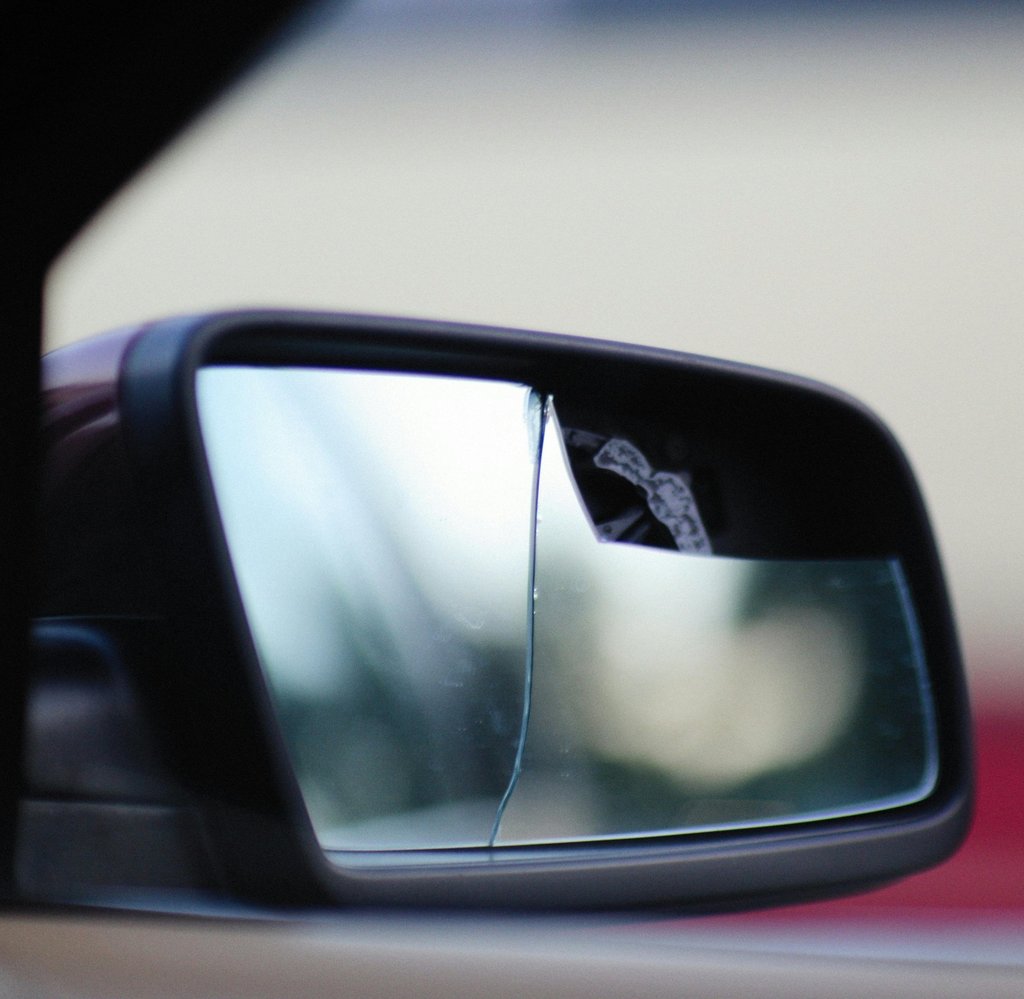
Mirror glass only — just the reflective glass is cracked or shattered, but the housing and motor are intact. This is the least expensive scenario and often the quickest fix.
Mirror glass + heating element — many modern mirrors include a defroster element embedded in the glass. If the glass is broken, the heating function goes with it and needs to be replaced as part of the glass.
Mirror housing — the plastic shell is cracked, broken, or detached, but the glass and motor survived. Common after parking lot clips and low-speed sideswiping.
Full mirror assembly — the entire unit (glass, housing, motor, wiring) is damaged or missing. This is the most involved replacement and the most expensive, but also the most common outcome of a direct hit at speed.
Powered folding mirror damage — higher-trim vehicles have mirrors that fold electronically. If the folding mechanism is damaged, the repair includes that component.
The right diagnosis matters because replacing a full assembly when only the glass is broken costs you more than necessary — and replacing only the glass when the housing is cracked leaves the job incomplete.
Side Mirror Replacement Costs in Apex, NC
Costs vary significantly based on vehicle make, model, trim level, and which components need replacement. Here's a realistic range for the Apex market:
Repair Type Typical Cost Range Mirror glass only (non-heated) $25 – $75 Mirror glass only (heated) $50 – $150 Mirror housing only $75 – $200 Full mirror assembly — economy/standard vehicle $150 – $350 Full mirror assembly — mid-size / crossover $200 – $450 Full mirror assembly — luxury or European make $400 – $900+ Full mirror assembly — with camera / ADAS sensor $300 – $800+ (plus calibration) ADAS recalibration (if required) $75 – $250
What drives the cost up:
Heated mirrors (require matching heating element)
Power-folding mirrors (more components, more labor)
Integrated turn signal / puddle light
Blind spot monitoring sensor built into the housing
Camera-equipped mirrors (some vehicles route the backup or side camera through the mirror)
European or luxury brands (OEM parts are significantly more expensive)
What keeps the cost down:
Glass-only replacement when the housing is intact
Choosing aftermarket parts (more on that below)
Simple, non-powered mirrors on older or base-trim vehicles
Labor in the Apex / Wake County market typically runs $50–$150 depending on complexity. A glass-only swap on a standard mirror can take under 30 minutes. A full powered assembly with wiring can take 1–2 hours.
Does Insurance Cover Side Mirror Replacement?
The answer depends on how the damage happened and what coverage you carry.
Comprehensive Coverage
Comprehensive covers damage caused by events outside your control — a falling branch, vandalism, a hit-and-run where the other driver fled. If someone clipped your mirror in a parking lot and left no note, that's typically a comprehensive claim.
North Carolina comprehensive deductibles are typically $100–$500 depending on your policy. If the repair cost is close to or below your deductible, it may not make sense to file a claim — you'll pay it out of pocket anyway, and a claim can affect your premium.
Collision Coverage
If you hit something — a post, a wall, another vehicle where you were at fault — that's a collision claim. Same deductible logic applies.
At-Fault Third Party
If another driver hit your parked car and you have their information, their liability insurance covers your repair. You pay nothing out of pocket and your premium isn't affected.
When to File vs. Pay Out of Pocket
A rough rule of thumb for Apex drivers:
Glass-only repair under $150: Pay out of pocket. Not worth a claim.
Full assembly replacement $300+: Check your deductible. If your deductible is $250 and the repair is $400, filing makes sense.
Luxury or ADAS-equipped mirror $600+: Almost always worth filing a claim, especially if you have a $250–$500 deductible.
Hit-and-run / vandalism / weather damage: File under comprehensive — these typically don't affect your rate the way at-fault collision claims do.
We work directly with all major insurance carriers and can handle the claims process on your behalf. Most customers find it easier to let us deal with the insurer directly.
Does Side Mirror Replacement Require ADAS Recalibration?
This is the question most shops don't bring up — and it's increasingly important as newer vehicles come equipped with sensors built into the mirror housing.
The short answer: it depends on your vehicle.
Many modern vehicles have one or more of the following integrated into the side mirror housing:
Blind Spot Monitoring (BSM) radar — detects vehicles in your blind zone and alerts you with a light in or near the mirror. Radar sensors for BSM are often mounted inside the mirror housing itself.
Lane Change Assist — a variation of BSM that alerts when a vehicle in the adjacent lane is approaching quickly.
Rear Cross Traffic Alert (RCTA) — detects crossing traffic when reversing; sensors are often in the rear bumper but some systems use mirror-mounted radar.
Side cameras — some vehicles (Honda, Nissan, and others) have cameras in the mirror housing for 360° surround view systems.
If any of these are present in your mirror assembly and the mirror is being replaced, recalibration is required after installation. The radar or camera needs to be re-synced to the vehicle's central processing system to ensure it's detecting correctly at the right angles and distances.
What happens if you skip it:
The blind spot light may illuminate constantly, not at all, or at incorrect distances. Lane change assist may fail to detect fast-approaching vehicles. In some vehicles, the system will throw a warning light and disable itself. In others, it will appear to function while operating on miscalibrated data.
On the 540, where lane changes at highway speed are part of the daily commute, a blind spot monitor that's off by 10 feet is not a minor inconvenience.
Vehicles Most Commonly Requiring Mirror Recalibration in Apex
Toyota / Lexus — BSM radar frequently housed in mirror; calibration via Toyota Techstream
Honda / Acura — mirror-mounted BSM on most Sensing-equipped trims
Subaru — EyeSight doesn't use mirror-mounted cameras, but BSM radar is in the rear bumper; varies by trim
Ford / Lincoln — BLIS (Blind Spot Information System) is mirror-integrated on most trims
GM vehicles — Side Blind Zone Alert uses rear bumper radar, typically no mirror calibration needed
Nissan / Infiniti — Around View Monitor uses mirror-mounted cameras; calibration required
BMW / Mercedes / Audi — multiple mirror-integrated sensors across most trims; always verify
Tesla — side cameras are in the B-pillar, not the mirror; no mirror-specific calibration, but always confirm
When you bring your vehicle in, we'll identify exactly what's in your mirror assembly and tell you upfront whether recalibration is part of the job.
OEM vs. Aftermarket Mirrors — Which Should You Choose?
This is one of the most common questions we get, and the honest answer is: it depends on your priorities and your vehicle.
OEM (Original Equipment Manufacturer)
OEM mirrors are made by the same supplier that built the original mirror on your vehicle — or by the automaker directly. They're designed to exact factory specifications: same fit, same finish, same functionality.
Pros:
Guaranteed fit — no gaps, misalignment, or finish mismatch
Identical functionality to original (heated elements, turn signals, folding mechanism all work as designed)
Required for some insurance claims that specify OEM parts
Important for ADAS-equipped mirrors — sensor placement is exact
Better resale value (documented OEM repair)
Cons:
Significantly more expensive, especially for luxury or European makes
Longer lead time if not in stock locally
For older vehicles, may be discontinued or hard to source
Aftermarket
Aftermarket mirrors are made by third-party manufacturers to fit your vehicle. Quality varies considerably across brands.
Pros:
Substantially lower cost — often 40–60% less than OEM
Widely available, usually in stock
Perfectly adequate for older vehicles or when resale value isn't a concern
High-quality aftermarket mirrors (CAPA-certified) are built to fit and function correctly
Cons:
Fit and finish may not match original exactly (color, texture, gloss)
Heated elements, turn signals, or folding mechanisms may be lower quality or not available in all trims
For ADAS-equipped mirrors, sensor housing tolerances matter — a poorly made aftermarket housing can affect calibration accuracy
Quality varies widely; cheaper options can have shorter lifespans
Our Recommendation
For vehicles 5 years old or newer, luxury brands, or ADAS-equipped mirrors: OEM or CAPA-certified aftermarket. The precision matters more on newer vehicles, and the cost difference is worth it.
For vehicles 6+ years old, base trim, non-powered mirrors: Quality aftermarket is typically the right call. You get the fix you need without overpaying for a part that costs more than the vehicle warrants.
For insurance claims: Ask your insurer whether your policy specifies OEM. Some do, some don't. If your policy allows aftermarket, we'll recommend the best CAPA-certified option for your vehicle.
How Long Does Side Mirror Replacement Take?
Mirror glass only: 20–45 minutes
Mirror housing only: 30–60 minutes
Full assembly, standard non-powered mirror: 45–90 minutes
Full assembly, powered with wiring: 1–2 hours
Full assembly with ADAS calibration: 2–3 hours total
Most jobs are completed same-day. If we need to order a part — particularly OEM for a less common vehicle — we'll give you an accurate timeline upfront.
Frequently Asked Questions
Is it legal to drive with a broken side mirror in North Carolina?
North Carolina law (NCGS § 20-126) requires that every vehicle have a mirror that gives the driver a clear view of the road behind. The driver's side mirror is legally required. The passenger side mirror is required if the driver's view to the rear is obstructed. Driving without a functional driver's side mirror can result in a moving violation. If your mirror is missing or non-functional, get it handled before you drive.
Can I just replace the mirror glass myself?
For non-heated, non-powered mirrors on older vehicles, DIY glass replacement is feasible — replacement glass kits are available online. For heated mirrors, powered mirrors, or anything with integrated ADAS sensors, DIY is not recommended. Improper installation of a heated element can cause shorts. Misaligned sensor housing affects calibration. And if the job isn't done correctly, you're back where you started.
My mirror housing is intact but the glass fell out. Do I need a full replacement?
Not necessarily. If the housing, motor, and wiring are undamaged, we can often replace the glass and heating element alone, which is substantially cheaper than a full assembly. We'll assess it when you bring it in.
Will a mirror replacement affect my paint?
A professional installation won't. Mirror housing clips and screws are designed to be removed and reinstalled without damaging the door panel or finish. If the mirror was hit hard enough to damage the door itself, that's a separate body repair conversation — but the mirror replacement process is non-destructive to surrounding paint.
How do I know if my mirror has a blind spot sensor in it?
Check your owner's manual under "Blind Spot Monitoring" or "Blind Spot Information System." If enabled, most vehicles show a small amber or green indicator light in or near the mirror housing when the system detects a vehicle in your blind zone. If you see that indicator during normal driving, you have BSM — and mirror replacement will require recalibration.
Can you match my mirror color exactly?
For painted mirror housings, we order the part in your vehicle's factory color code. On most vehicles this is an exact match. Unpainted or matte-finish housings are replaced in kind. If there's any question about finish match, we'll show you the part before installation.
How soon after replacement can I use my heated mirrors or powered folding?
Immediately after installation. Unlike windshield adhesive, which requires cure time before the vehicle can be driven, mirror wiring is connected and functional as soon as installation is complete. Heated mirrors and power folding work as soon as the ignition is on.
My car is a lease — does it matter which parts you use?
Check your lease agreement. Many leasing companies (Toyota Financial, Honda Financial, BMW Financial Services, etc.) require OEM parts for covered repairs to avoid excess wear charges at lease return. If you're not sure, we can help you check — or we'll default to OEM to keep you safe.
Ready to get your mirror sorted? Apex Auto Glass Fix handles side mirror glass, housing, and full assembly replacements across Apex, Cary, Holly Springs, Morrisville, Fuquay-Varina, and Wake County. We work directly with your insurance, stock a wide range of OEM and CAPA-certified aftermarket parts, and perform ADAS recalibration in-house when it's needed. Visit apexautoglassfix.com to get a fast quote — most jobs are done same-day.